It's been 13 weeks since I first started learning even what "Digital Media" meant.
It was a great experience to not only concentrate on Radio and Television, but rather get a taste of what RTA really has to offer as a whole. Getting exposed to the basics of digital media in today's multimedia world has made me realize that it's not for me. However, in regards to the course, it was good enough for people to figure out whether or not this is the kind of field they are interested in. Some people knew Digital Media wasn't for them and some people are still interested in learning more about this field.
I felt that it wasn't easy enough to allow people to think that this would be an easy field to get into, but it was hard enough to show people how much work it takes to create something that looks so simple on screen, but is actually very complex in reality. I felt that it was a good enough exposure for us to realize how important and how powerful digital media can be used as a tool of communication.
Although what could be changed/improved is the fact that some people have not been exposed to this field before, yet others have had some experience with some complex tools such as flash. I find it unfair that those who are still new to this is suffering in terms of marks because of their lack of experience. Due to the nature of these programs and it's complexity, I feel that it is necessary to mark an individual's effort along with the work they have produced. It's unfair to know that some people who have had experience with programs such as Flash to create their own work that is significantly more professional than others, thus leading to a significantly better mark than those who have tried (and usually spend more time) and created work that is not as great.
There also needs to be an improvement in the way labs are taught. Due to the sophistication of digital media, especially for newcomers, and with the lack of time we have to practice/experiment with these programs, every lab class and the time in the classes needs to be more efficient and more productive. The TA's tend to leave it mostly up to us and our own will to learn without much of a interactive guide to introducing us to content.
This course has provided me with basic knowledge of creative applications such as Adobe Fireworks, Flash and Dreamweaver. However, it was not my intended path before going into RTA to pursue a career in digital media. Therefore, I have decided to step down from this branch of RTA and pursue another aspect of it.
The understanding of digital media, how it works, how effective it is (especially with the development of the internet) is the most important skills I'll take out of this course. This is a new way of communicating to a mass audience and it's important to know that these options exist, especially when working on productions that require a huge audience. By using content such as digital media, you can gain attention very easily, thus benefiting your productions. I have enjoyed what this course has to offer and will step out of it with the basic principles of design and digital media.
Wednesday, November 19, 2008


Saturday, November 15, 2008
Dreamweaver (Week 11)
Dreamweaver is a very helpful tool to create web pages for the internet. Especially for those who are more comfortable with designing a website through the use of visuals rather than text code. The WYSIWYG concept is a very good idea and allows for amateurs like us to be able to create our own web pages for the internet without the help of web site builders.
There are however, a lot of different functions, and it does take a long time to learn and fully use the program to it's maximum capabilities. Although I do believe it can do more than what we are taught in our lecture and lab classes because there simply just isn't enough time to be able to teach us everything we need to know. It's great to be learning the basics to see if this is what we enjoy and if we are willing to pursue this further in our journey ahead in RTA.
Unfortunately, it's not my path. It was great to learn about these applications which make the web more interactive. I came for the television aspects of this program, but who knows. Only time will tell.
On another note... I have come up with a few ideas that I will probably use for my website. I looked through my computer to see what photos I could use for my website and the one that just kept coming up is my experience going through Basic Training with the Canadian military. One of the most cherished times of my life. It was hard and tough, but making it through really inspired me and shaped me into a better individual overall. I have many pictures and videos that the website could use. The pictures will lay out my experience and skills that I have developed throughout military boot camp.
There are however, a lot of different functions, and it does take a long time to learn and fully use the program to it's maximum capabilities. Although I do believe it can do more than what we are taught in our lecture and lab classes because there simply just isn't enough time to be able to teach us everything we need to know. It's great to be learning the basics to see if this is what we enjoy and if we are willing to pursue this further in our journey ahead in RTA.
Unfortunately, it's not my path. It was great to learn about these applications which make the web more interactive. I came for the television aspects of this program, but who knows. Only time will tell.
On another note... I have come up with a few ideas that I will probably use for my website. I looked through my computer to see what photos I could use for my website and the one that just kept coming up is my experience going through Basic Training with the Canadian military. One of the most cherished times of my life. It was hard and tough, but making it through really inspired me and shaped me into a better individual overall. I have many pictures and videos that the website could use. The pictures will lay out my experience and skills that I have developed throughout military boot camp.
Friday, November 7, 2008
Web 2.0 - The Web... revitalized! (Week 10)
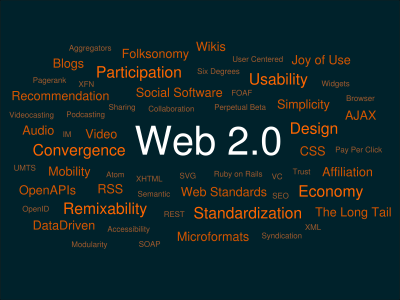
Well, we all know what the internet is... but what is Web 2.0? What's so special about it?
Here are some of the characteristics that define Web 2.0
1) Dynamic content & viewable on multiple platforms
2) User contribution
3) Social Media
4) Online Apps
5) Harnessing Collective Intelligence
Basically, this change allows us as users to be more interactive with what the web has to offer us. It allows each individual (literally) to use the internet to collaborate and showoff their creativity to the world. You can be famous with a click of a button.
1. Dynamic Content/Viewable on multiple platforms
No more shall the internet just be what it is. It's always changing. Dynamic content is information that is always changing. For example, you can now get interactive pages that let you personalize your own space the way you want it to be shown to you. For example, this blog can be displayed the way I want it to be displayed. I want the home page to be layed out the way I want it to and move different modules around the way I want.

And not only is information always changing, you can now bring this content with you however you like. If you don't want to watch your favourite episode of 30 Rock on your laptop on the way to work, you can stick it in your iPod and watch it there. You can now do things with different gadgets that you never got to do before. Cellphones were always meant to be used as portable phones. Now it can take pictures, become your new MP3 player, your organizer, your photo album, etc.
2. User Contribution
 The internet isn't used now strictly for professionals. It's used by anyone who knows how to use a computer and has internet. The interchangability of information allows content from almost anything and anyone to be put on the internet. For example, look at a specific forum board like on your favourite celebrity on IMDB.com. You can start your own discussion with those who have the same interest in a celebrity as you do and chat about him/her. Your input also rates your celebrities and tells IMDB.com how popular your celebrity is based on user generated hits. This is called a "User Generated Value", while your input on celebrities is your "User Generated Content."
3. Social Media
 It's a new way of socializing, and knowing people. It's great to be able to reach all your professional friends in one place. LinkedIn is an example of why Web 2.0 exists. It's like your own personal resume with direct links to your professional co-workers, references and connections. You can join groups that you relate to, meet new people who can potentially hook you up with a new job and get your old bosses to recommend you! This is basically YOU online, and an easy way for someone to pass by your page and know all about who you are, with the click of a button!
4. Online Applications
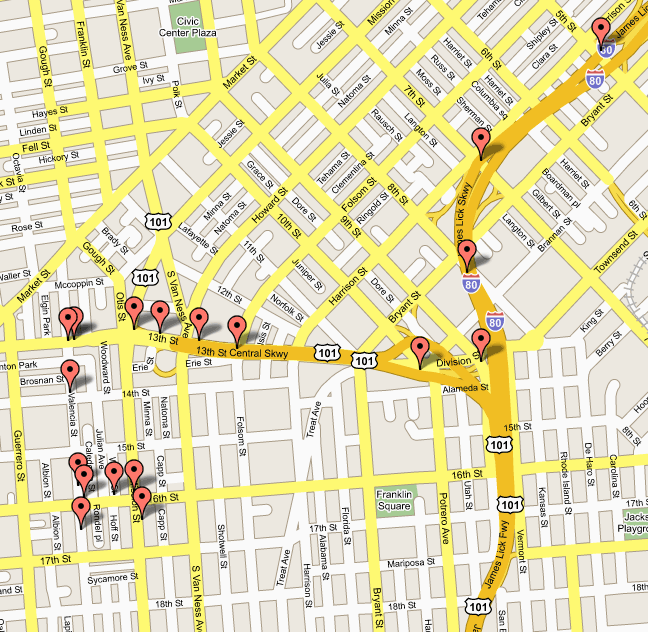 It works just like software on your computer, except you do it online... right from your browser! Look at something like Google Earth and Google Maps, you basically have the whole world, including your GPS online. Plan your own routes, look for specific places, find out where the nearest restaurant is from your house! It's a fairly simple concept, it's software that functions online.
5. Harnessing Collective Intelligence
Sites are now thinking for themselves. They collect data from users who visit the site and inputs their opinions into what the website does and makes changes in it's content in order to make things better. This is usually done by the visitors instead of site owners. Something as simple as tagging, which is done by users of the site of something like Blogger! When writing blog posts, you are able to label your posts with little keywords which will help organize content. Along with this, it is now easier for amateurs to create content which would usually be left for professionals. This is called "crowdsourcing." Learning something like HTML programming used to be the way to make a website, now there are webbuilders that come with free hosting space like Yahoo Geocities that helps you create your own personalized websites, and all you have to know is how to use a mouse and keyboard.

Subscribe to:
Comments (Atom)


 Posts
Posts

